
In this editorial conversation, Bhai-Dhawa Sesay explains why THE 5C THEORY treats Culture, Corruption, CITIZENSHIP, Contentment and Complacency as one connected public system rather than five separate problems.
The theory is not a sentence. It is a map.
Why did you build a five-part framework?
Bhai-Dhawa Sesay: I kept encountering explanations that were true but incomplete. People could point to corruption, weak institutions, political division or cultural pressure, yet the same failures survived exposure and changes of leadership. The five-part framework developed because each force helps explain how another is protected. Culture shapes obligation; corruption turns authority into private access; weakened citizenship lowers the expectation of equal treatment; contentment makes failure survivable; and complacency makes organized action appear pointless.
Why begin with culture?
Sesay: Culture is not presented as a national defect. It is the source of belonging, memory, care, loyalty and moral responsibility. The difficult question is what happens when a responsibility to family, community, party, region, profession or religious authority collides with a public duty that should apply equally. Beginning with culture allows the argument to examine that tension without pretending that public conduct exists outside social relationships.
What does citizenship contribute to the analysis?
Sesay: Citizenship changes the language of the relationship between people and public power. A supporter may ask a leader for help. A client may depend on a patron. A subject may obey without expecting an explanation. A citizen has standing: the right to understand a procedure, ask a public question, challenge an error and expect the same standard that applies to someone with greater influence.
How did living inside and outside Sierra Leone affect the framework?
Sesay: Distance did not remove me from Sierra Leonean public life. It gave me another position from which to compare expectations, technologies, institutions and forms of political communication. My work in civic debate, digital media, culture and technology kept me connected to people at home and across the diaspora. Returning to live and work in Sierra Leone from 2025 into 2026 reinforced the central question: why were so many familiar complaints still circulating without a reliable path from recognition to correction?
How do you distinguish resilience, contentment and complacency?
Sesay: Resilience is the capacity to continue and improvise. Contentment can protect dignity by refusing to let hardship define the whole of life. Complacency begins when repeated disappointment lowers expectation and action starts to appear useless. The civic danger is not that people survive. It is that their success in surviving can remove consequences from the institution responsible for the failure.
What is the unknown-citizen test?
Sesay: It asks whether a person without wealth, status, family access, party influence or a private intermediary can still receive clear information, fair treatment and a usable route for correction. If a system works only when someone important intervenes, the successful exception does not prove that the institution works. It shows that formal procedure has been displaced by private access.
Where can institutions begin?
Sesay: Publish the standard. Record the decision. Explain unequal outcomes. Make the correction route usable. Protect staff and citizens who follow the proper procedure. These steps may appear modest, but institutions become credible through repeated practices that do not require personal recognition.
What do you want readers to do with the book?
Sesay: Test the framework. Ask where it clarifies experience and where it requires evidence, qualification or a counterexample. Use it to improve public language, not to label an entire country or excuse personal responsibility. The purpose is to identify where a reinforcing cycle can be interrupted by citizens, leaders, families, institutions, professionals, artists, educators and communities.
Editorial note: this interview was prepared from approved public biographical and title materials and reviewed by Bhai-Dhawa Sesay before publication.
Continue reading
More from the Journal
When Resilience Begins to Protect Institutional Failure
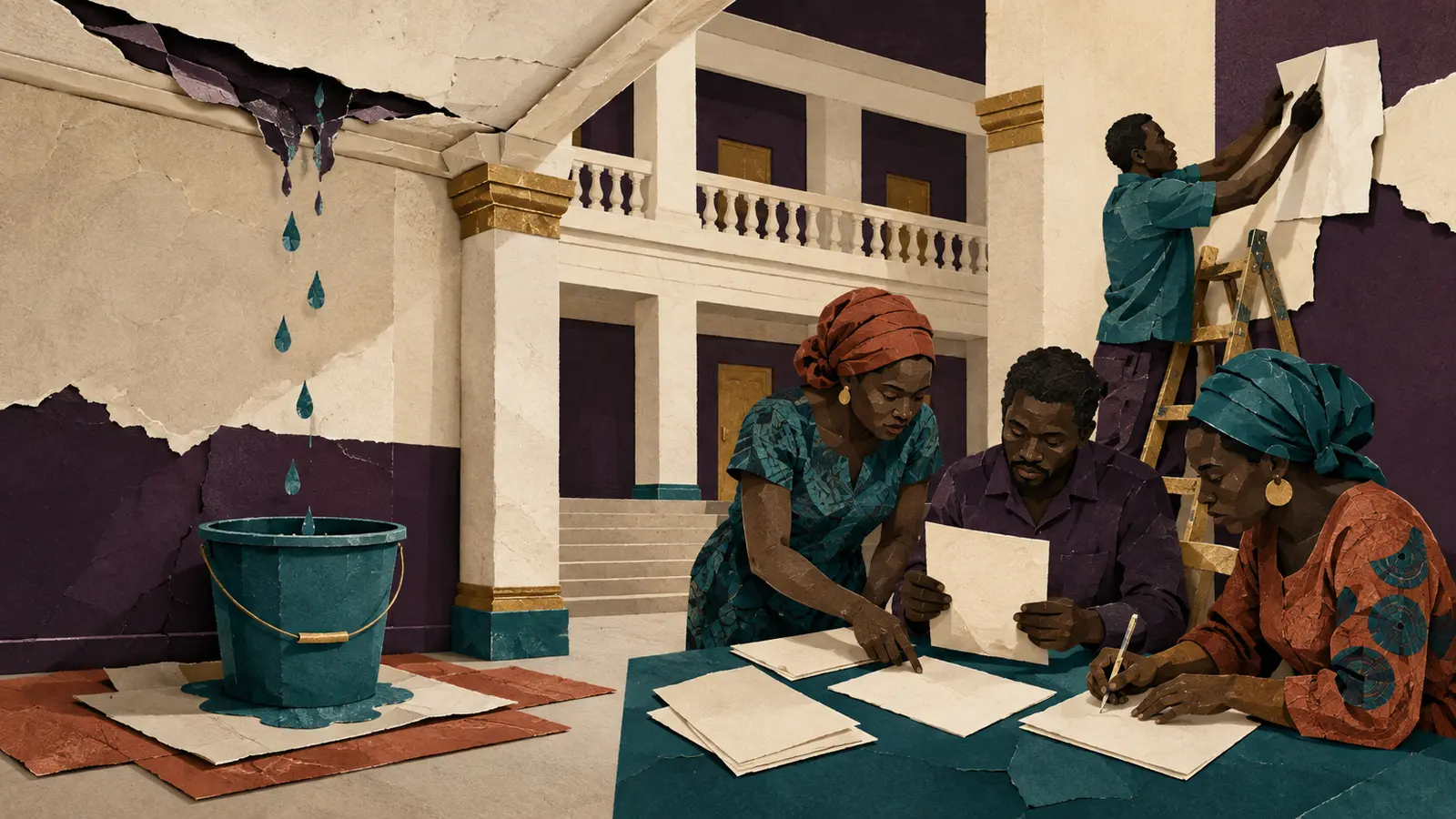
Communities should not abandon the adaptations that help them survive. They can preserve those solutions while documenting the failure that made them necessary.

Why Recognised Public Failures Can Remain Durable
Recognition alone does not create records, collective capacity or sustained accountability. The harder question is what prevents knowledge from producing correction.
Explore the complete Journal or receive approved publishing updates through Leone Connect Dispatch.