
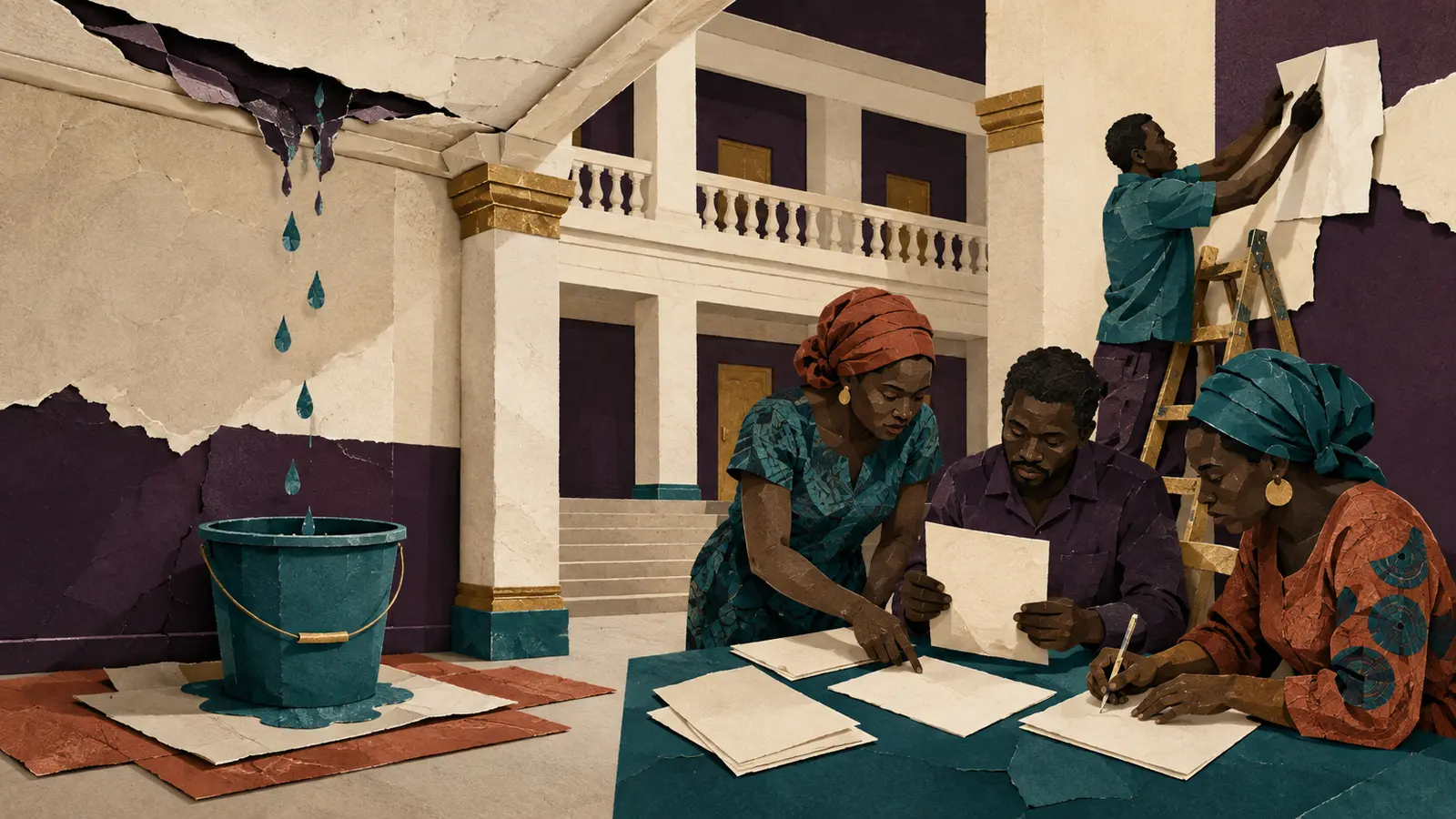
Resilience is one of the great strengths of families and communities. People improvise, share, repair, adapt and continue through conditions that might otherwise stop daily life. The question is not whether resilience is valuable. It is what happens when private adaptation becomes the permanent answer to a public failure.
The achievement and the warning
When a community organizes a temporary solution, the immediate achievement deserves respect. Children reach school, a service continues, a damaged space becomes usable or a vulnerable person receives support. The warning appears when the same emergency response is required repeatedly and the responsible institution no longer experiences meaningful pressure to correct the underlying problem.
Adaptation can make failure less visible. Households purchase private alternatives. Workers create informal workarounds. Communities raise funds for responsibilities already assigned elsewhere. Each decision may be reasonable, but the combined effect can allow an institution to treat its own weakness as normal.
Resilience should help people survive failure—not teach institutions that failure has no consequence.
Preserve the solution and document the failure
A stronger civic response does not ask people to stop solving urgent problems. It adds a second track. Alongside the immediate repair, the community can record what failed, who carries the formal responsibility, what the temporary solution cost, how often the problem has returned and what standard would count as a lasting correction.
This distinction protects the dignity of adaptation without allowing the temporary response to erase the public record. It also helps communities move from repeated fundraising or private complaint toward a defined request supported by evidence.
Turning endurance into leverage
- Name the service or responsibility clearly.
- Record dates, frequency, cost and practical consequences.
- Separate the temporary community response from the permanent institutional duty.
- Define a measurable correction and a reasonable review date.
- Keep the record available after the immediate crisis has passed.
Contentment and resilience can preserve dignity. They become civically dangerous only when endurance is mistaken for consent or when successful adaptation removes every consequence from recurring failure.
The objective is not permanent outrage. It is durable expectation: the belief, supported by records and organized follow-through, that public responsibilities can be named, measured and corrected.
Continue reading
More from the Journal

In Conversation with Bhai-Dhawa Sesay: Why the Five Forces Must Be Read Together
An editorial conversation about the connected Five C framework, the unknown-citizen test and the practical difference between survival and civic surrender.

The Unknown Citizen Test
A practical test of citizenship asks whether a person without wealth, influence or a private intermediary can still receive fair treatment under the same rules.

Why Recognised Public Failures Can Remain Durable
Recognition alone does not create records, collective capacity or sustained accountability. The harder question is what prevents knowledge from producing correction.
Explore the complete Journal or receive approved publishing updates through Leone Connect Dispatch.