

Public problems can be widely recognized without becoming easier to solve. People may agree that an institution is failing, a process is unfair or a standard is routinely ignored, yet the same pattern can continue year after year. Recognition matters, but recognition alone does not reorganize power, create reliable records or sustain collective attention.
A problem can survive its own exposure
Exposure is often treated as the final stage of accountability: identify the failure, make it visible and expect correction to follow. In practice, a system can absorb criticism when the relationships and expectations protecting it remain intact. The question therefore changes from “Do people know?” to “What prevents knowledge from producing a durable response?”
THE 5C THEORY examines that distance through five connected forces. Culture can turn personal loyalty into a reason for silence. Corruption can convert public rules into private routes of access. Weak citizenship can lower the expectation of equal treatment. Contentment can help people adapt to recurring failure. Complacency can persuade them that responsible action will change little.
Connections matter more than labels
None of these forces explains public life on its own. Their value lies in the way they interact. A person may dislike an unfair process and still depend on a personal connection to navigate it. A community may improvise an admirable solution while the responsible institution learns that failure carries little consequence. Citizens may speak forcefully in private while lacking a shared record, a defined demand or an organization capable of following through.
The theory is not a sentence. It is a map.
A map does not decide the destination. It helps people identify the routes through which a problem is protected and the places where intervention may be possible. That intervention might begin with a published service standard, a documented case, a transparent decision record, an independent review, a professional association or a small collective commitment that can be measured over time.
From private recognition to public capacity
The most useful next question is not simply whether citizens are angry enough. It is whether they possess the information, relationships, procedures and continuity required to convert concern into correction. Public capacity grows when people can define the standard, preserve evidence, protect participation, assign responsibility and return to the issue after the first moment of attention has passed.
Durable failure is rarely maintained by one dramatic act. It is often maintained through ordinary repetition. That also means change can begin through a different kind of repetition: fair procedures used consistently, records kept carefully, expectations stated publicly and citizens treated as equal members rather than temporary petitioners.
Continue reading
More from the Journal

In Conversation with Bhai-Dhawa Sesay: Why the Five Forces Must Be Read Together
An editorial conversation about the connected Five C framework, the unknown-citizen test and the practical difference between survival and civic surrender.
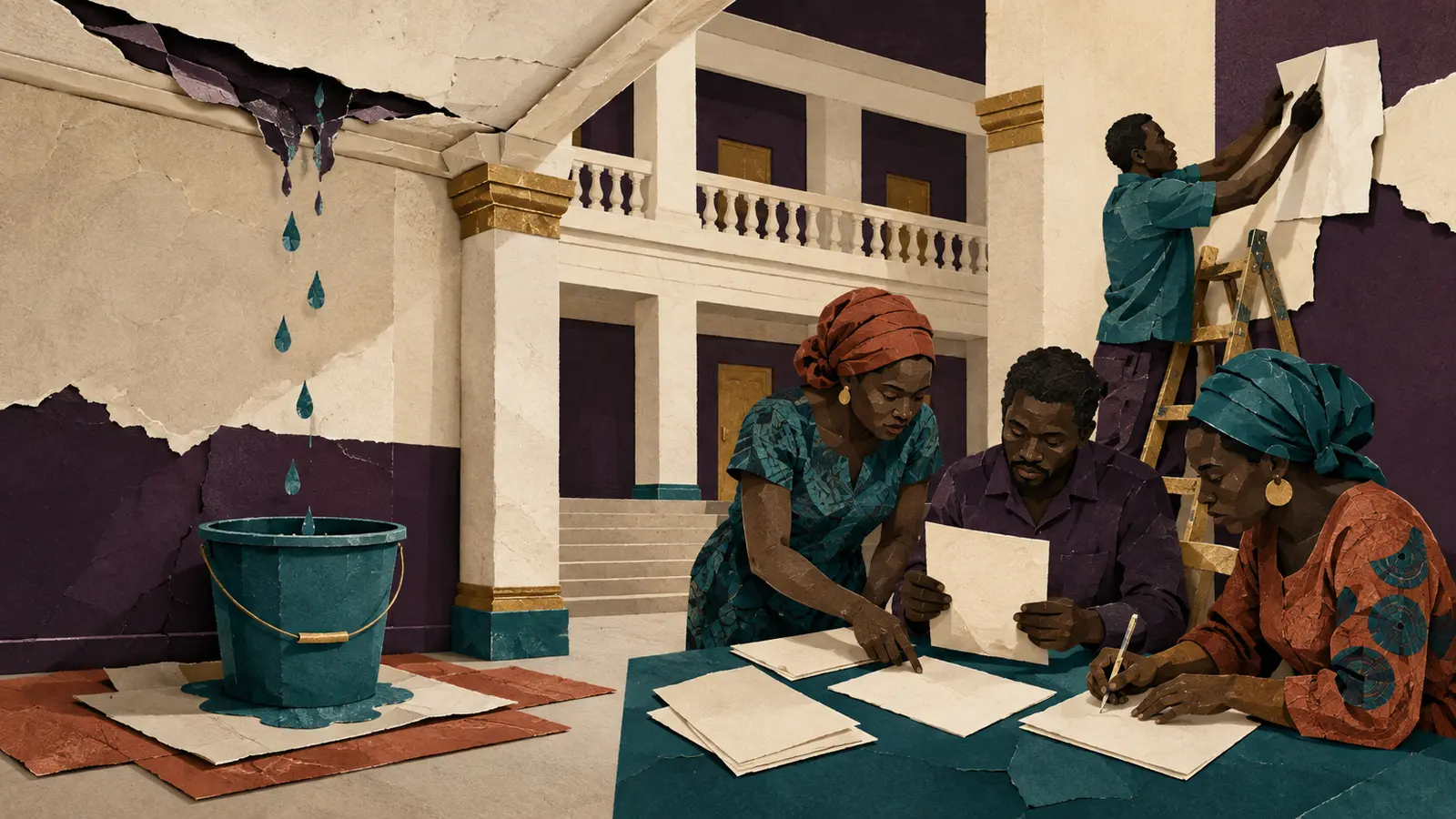
When Resilience Begins to Protect Institutional Failure
Communities should not abandon the adaptations that help them survive. They can preserve those solutions while documenting the failure that made them necessary.

The Unknown Citizen Test
A practical test of citizenship asks whether a person without wealth, influence or a private intermediary can still receive fair treatment under the same rules.
Explore the complete Journal or receive approved publishing updates through Leone Connect Dispatch.